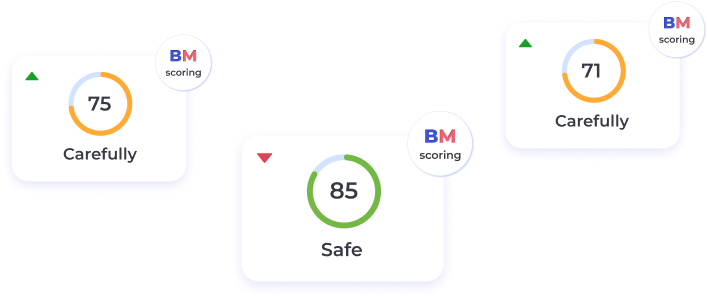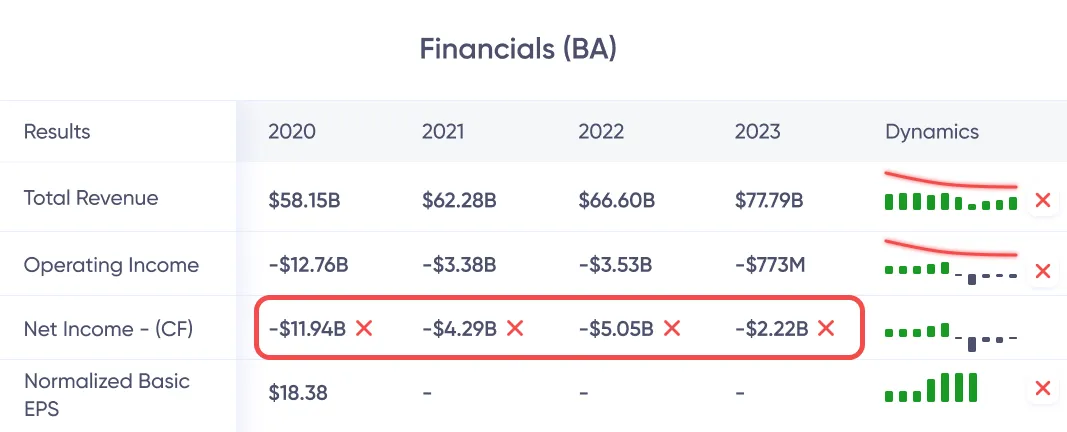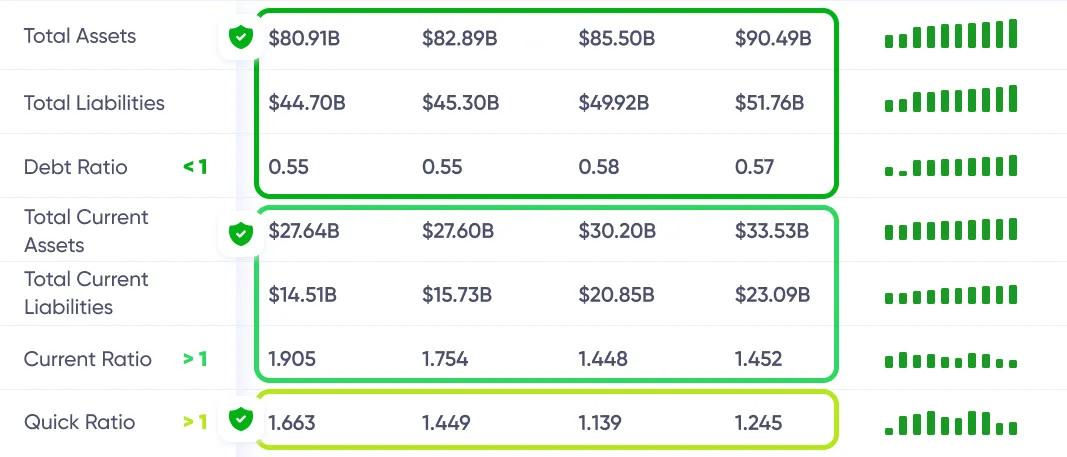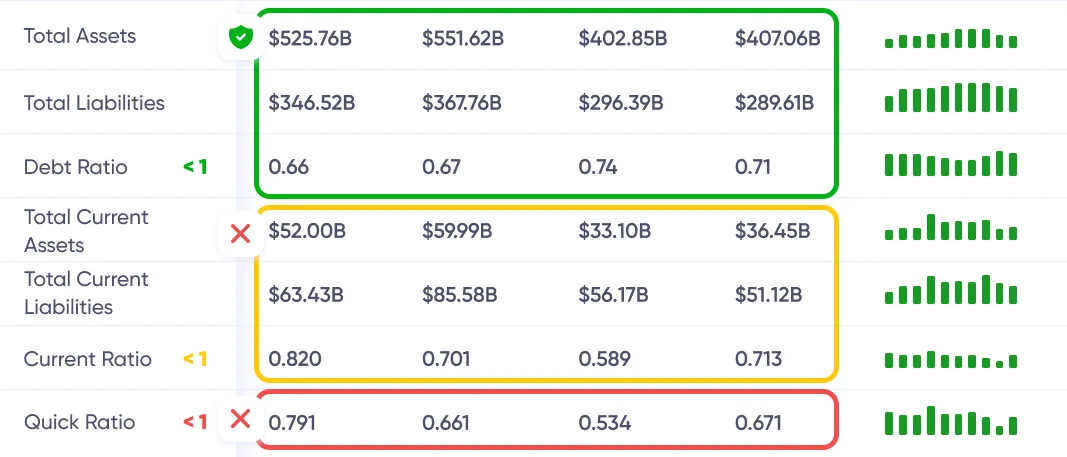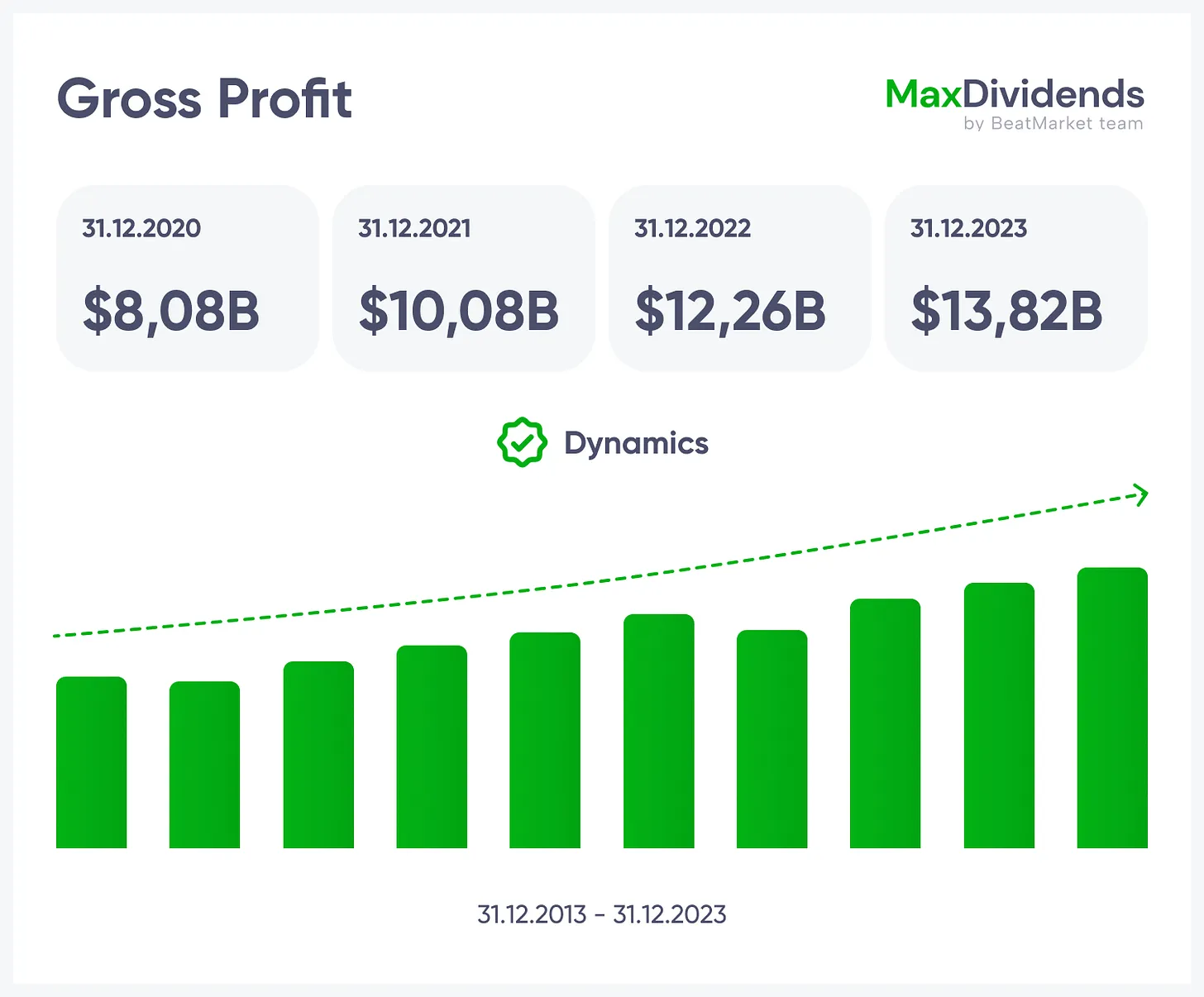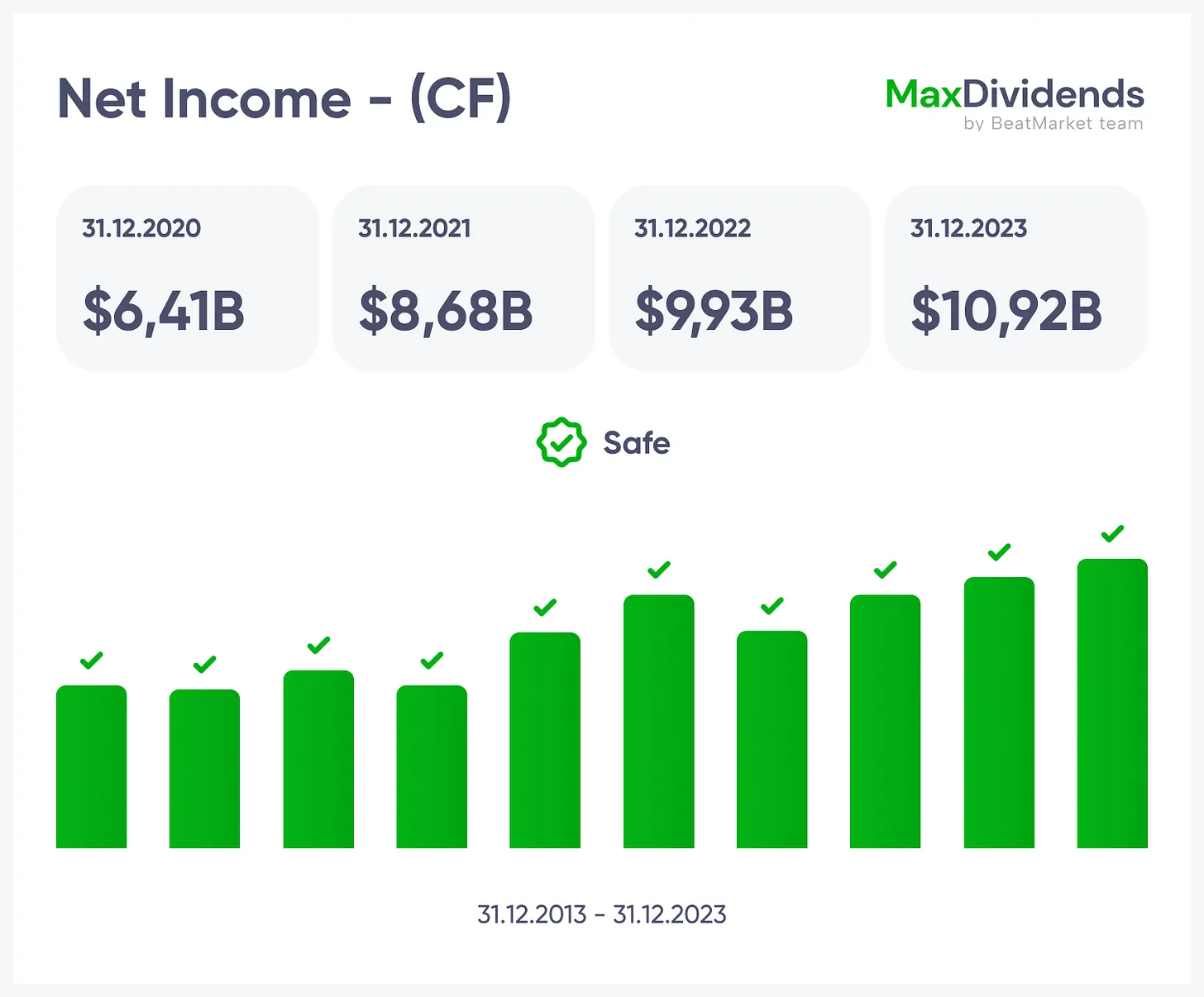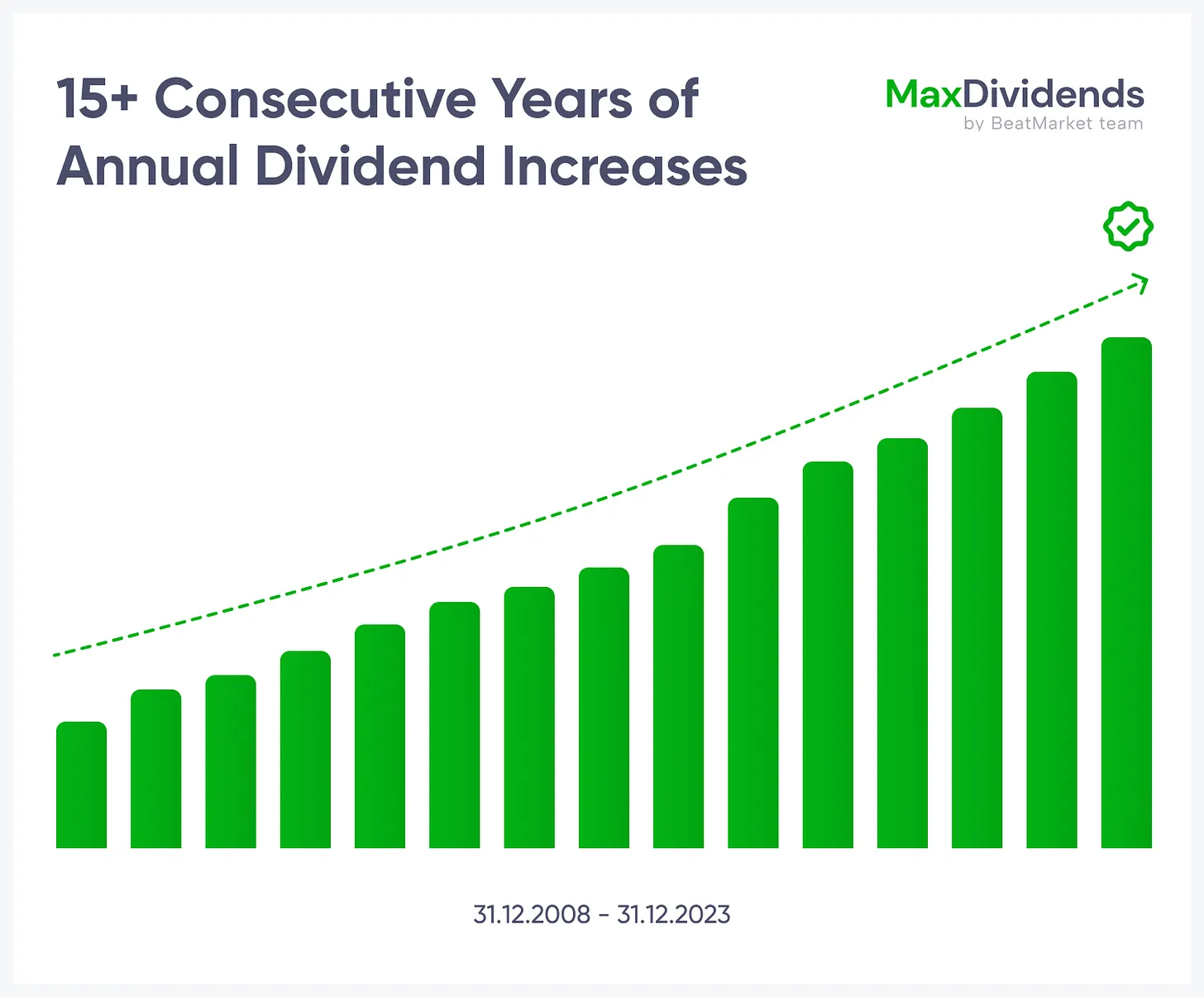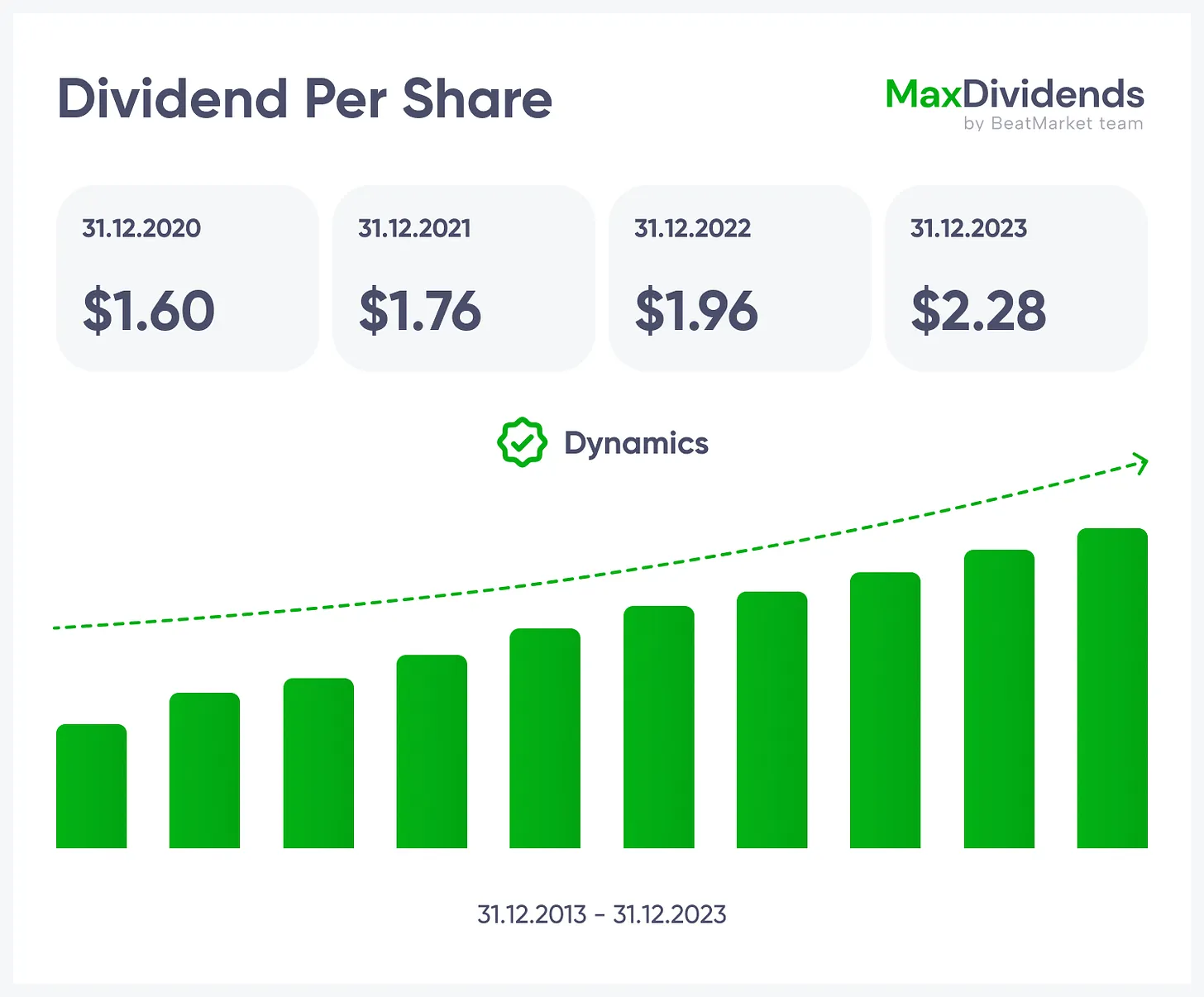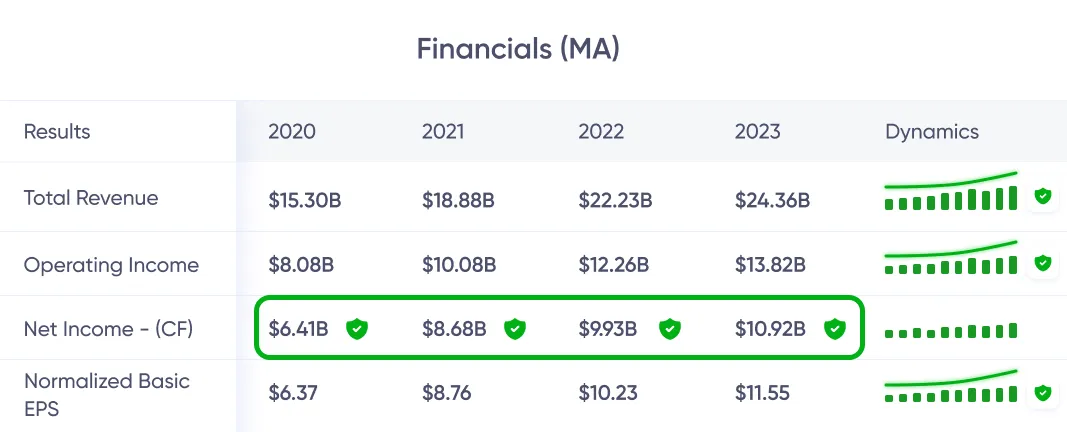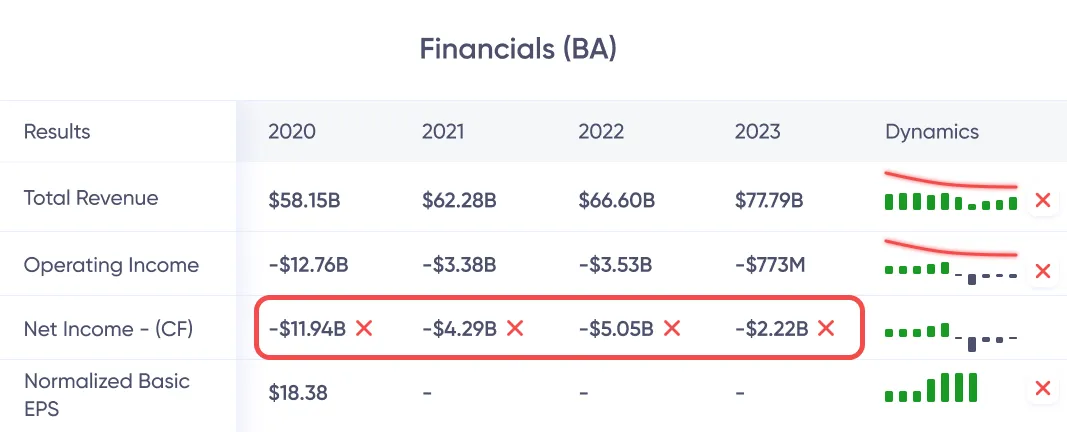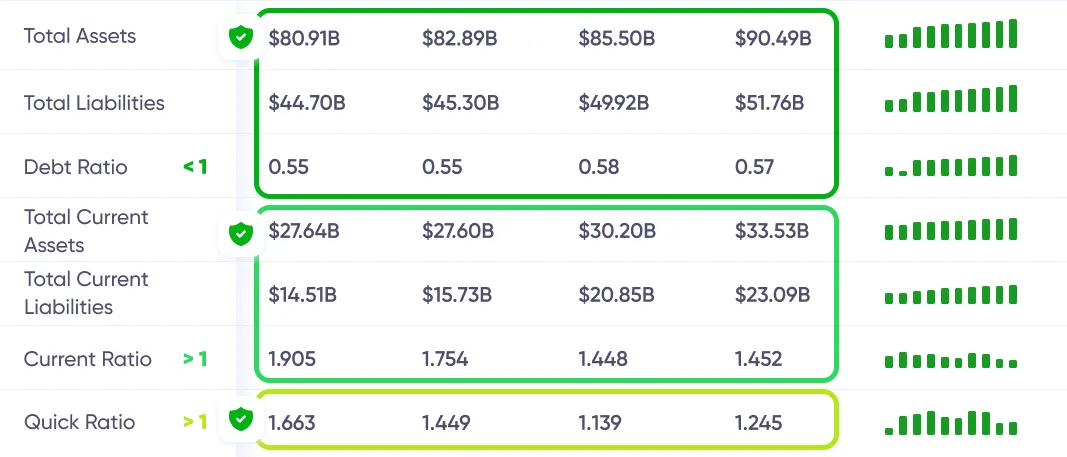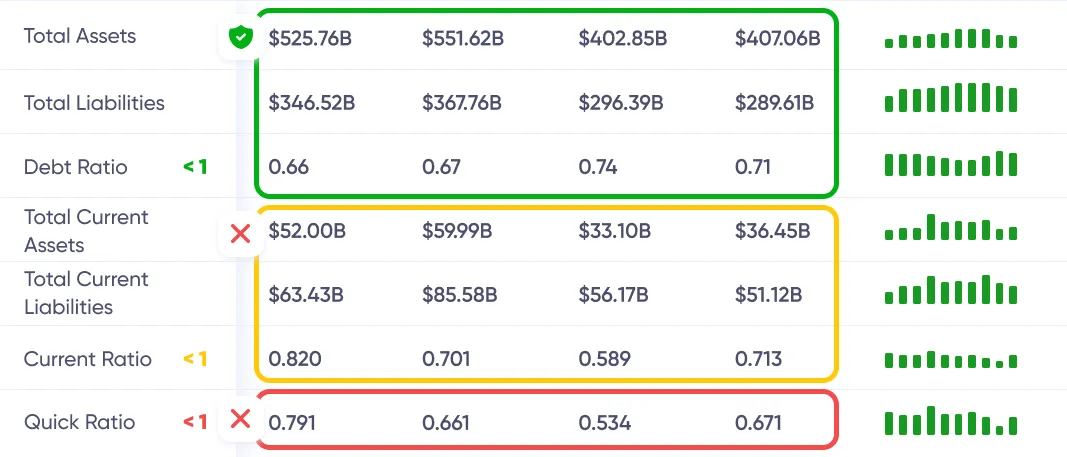
The business appears to be well managed and the company has been consistently generating income and has been sustainable for many years
The company is earning and profitable at the moment according to the latest reports
Financial Score
A system for in-depth assessment of companies based on more than 150 indicators. Find the best stocks in two clicks and immediately add them to your portfolio
How it works
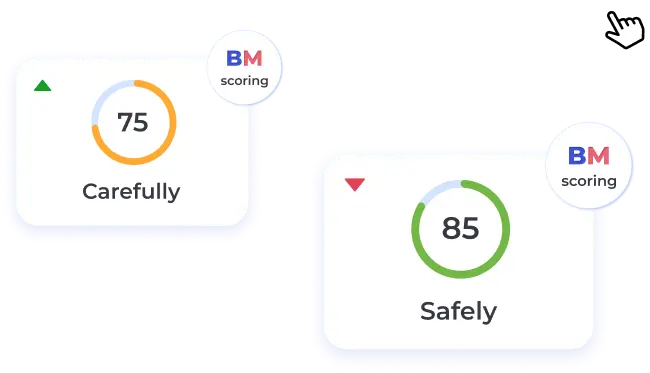
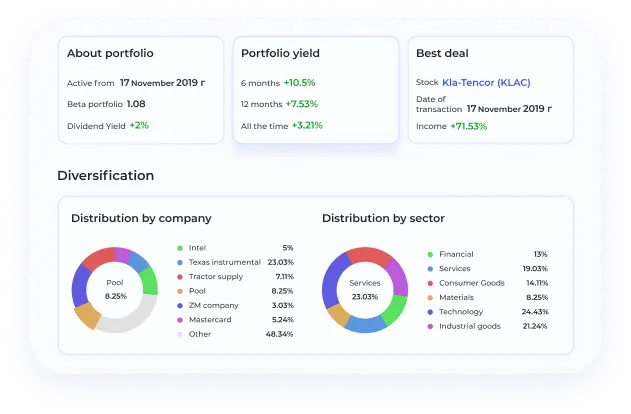
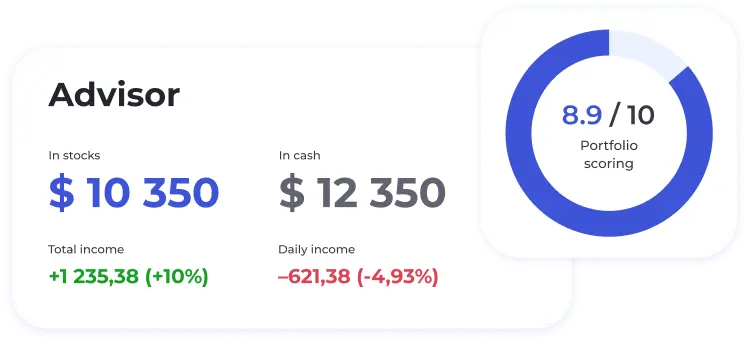
Scoring - exclusive BeatMarket feature. Is based on deep fundamental analysis of company data over a long period of time. The assessment is made taking into account more than 150 metrics and indicators. You can see more about how we do this in the video – learn more
An green up arrow, a red down arrow, and grey two side arrows - signal the stage of development of the company. We, the BeatMarket team, buy shares that have an up green arrow and hold them in our portfolios until the arrow changes to red, down.
🟢 If you see 90+ BeatMarket Score and green line up - it is good to invest in
🔴 If you see 50- BeatMarket Score and red line down - it is better to avoid investing
Undervalued \ Overvalued \ Fairly valued – compare competitor companies` P/E Ratios to find out if the stocks you`re looking to trade are overvalued. We take the P/E average among competitors. If a company`s current P/E is 20% or more lower than its competitor`s average, the company is considered undervalued. If it is higher by 20% or more, it is overvalued. P/E Ratio is calculated by dividing the market value per share by the earnings per share (EPS).
How This Company Makes Money
Dividend Analysis FCA
Max Ratio
–
5Y Dividend Growth
3.00 %
Consecutive Years
–
Dividend History FCA
1 year
3 years
5 years
10 years
15 years
11/21/2021 - 11/28/2021

Similar to
TSLA
Tesla Motors
UndervaluedFairy valuedOvervalued
Profitability for 12 months.
First Trust China AlphaDEX Fund Dividends: 2.70 % Yield, History, Payment Schedule
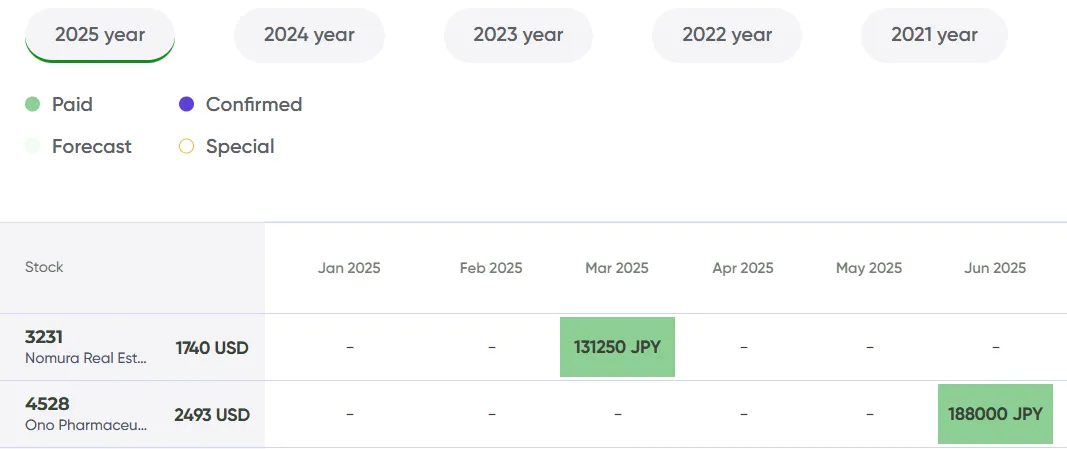
The Dividend Calendar is a simple, powerful tool that helps you track what’s happening with your dividend income—either across your whole portfolio or within a specific strategy.
You can quickly see what dividends have already hit your account, when they were paid, and what payouts are coming up next—organized month by month. It gives you a clear picture of your expected income and lets you review what you’ve earned in the past.
By default, the calendar shows dividends before taxes. Since each country and region has its own tax rules for dividends, tax settings are handled separately.
How to Read the Calendar
Here’s what the colors mean:
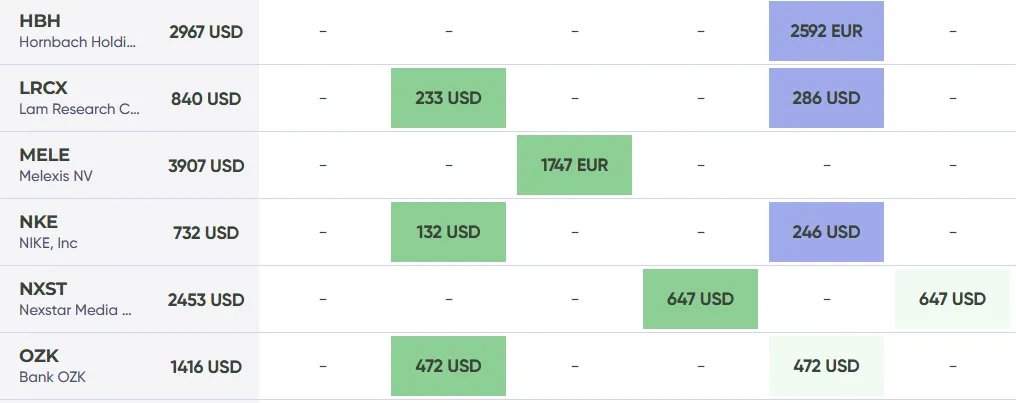
Dark green: Dividends that have already been paid
Dark blue: Dividends that have been declared and will be paid soon
Light green: Estimated dividends—future payouts based on the company’s regular history
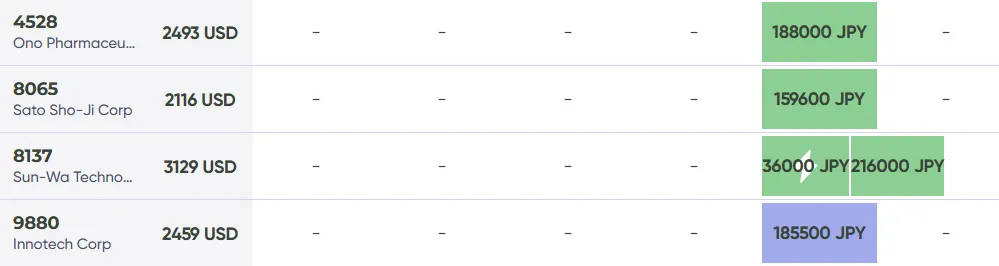
Quick note: There are two kinds of dividends—regular and irregular. Regular dividends come on a set schedule (like quarterly or annually). Irregular ones are occasional—think special or bonus dividends that companies pay out when they have extra cash or hit certain milestones.
You’ll also see a lightning bolt icon ⚡ next to those bonus/special dividends. These don’t show up in future projections since they’re unpredictable.
How the Numbers Are Calculated
Dividends inside the calendar are shown in the currency they’re paid in. To the left of the company name, you’ll see the total paid during the selected time period.
By default, the calendar shows the current year, but you can choose any period you want—either manually or using the quick year tags.
Every time you select a date range, the app automatically recalculates your dividends for that period—paid, confirmed, and projected. It adds everything up, including both regular and special dividends, so you get the full picture of your income for the timeframe you’re looking at.
Example
Let’s say you picked the 2025 tab. The calendar will update to show cells from January 1, 2025, through December 31, 2025. Inside those calendar cells, you’ll see dividend payouts loaded in — paid, confirmed, and projected ones. Special dividends are also included.
All of these dividends are totaled up, and the full amount is displayed next to the company ticker, over in the first column on the left.
When you look at future periods, the app uses past dividend patterns to estimate what’s coming. It looks at frequency, timing, and consistency of previous payouts to forecast what to expect going forward.
What Is the Financial Score?
The Financial Score is a rating system that evaluates a company`s fundamental strength. It ranges from 20 to 99, with higher scores indicating stronger, more reliable companies.Stocks with a score of 80+ are considered high-quality investments, while those rated 50 or below are seen as weaker choices. This score allows you to efficiently filter thousands of stocks and build investment strategies that maximize returns.
Global vs. Local Scores
The Financial Score consists of two components: Global and Local. The Global Score measures a company`s strength on a worldwide scale, while the Local Score evaluates its performance within its home country.Both scores use the same metrics but are ranked separately, helping you identify market leaders at both global and local levels.
Coverage and Methodology
Our team analyzes over 20,000 companies worldwide, covering:
We collect financial data daily and review 25 years of historical reports to ensure thorough and accurate evaluations. This long-term perspective allows us to assess a company’s resilience during economic downturns.
The Financial Score Consists of 3 Key Components
1. Growth Evaluation
We analyze key financial metrics, including sales, operating profit, Net Income, earnings per share, return on equity, and their trends over time.Understanding whether a company is growing and evolving—or stagnating and incurring losses—is essential for making informed investment decisions.
2. Dividend Policy Evaluation
A company’s approach to dividends reflects its transparency and management strength. At MaxDividends, we assess:
Whether the company pays dividends
Dividend trends and payment frequency
Whether dividends come from current income rather than past profits or debt
Dividend per share and the percentage of profit allocated to payouts
A well-structured dividend policy—whether through consistent payments, regular increases, or reinvesting all funds into growth—indicates strong, strategic business management.We also consider share buyback programs. When a company repurchases its own shares, it signals management’s confidence that the stock is undervalued.
3. Stability Evaluation
This section measures the company’s overall financial health, including:
The ratio of total assets to total liabilities
The ratio of current assets to current liabilities
Debt-to-equity ratio
Growth sustainability
A financially stable company maintains a strong cushion to navigate market downturns and continue operating effectively during economic crises.
Scoring System: Growth – Dividend – Stability
Each section—Growth, Dividend, and Stability—has a maximum score of 5 points. If a company meets all top-tier business criteria, it earns a total of 15 points.The system then ranks companies and converts this evaluation into the Financial Score:
The Global Financial Score ranks companies worldwide.
The Local Financial Score ranks companies within a specific country.
Why This Matters
Buy Strong Businesses, Sell Weak Ones
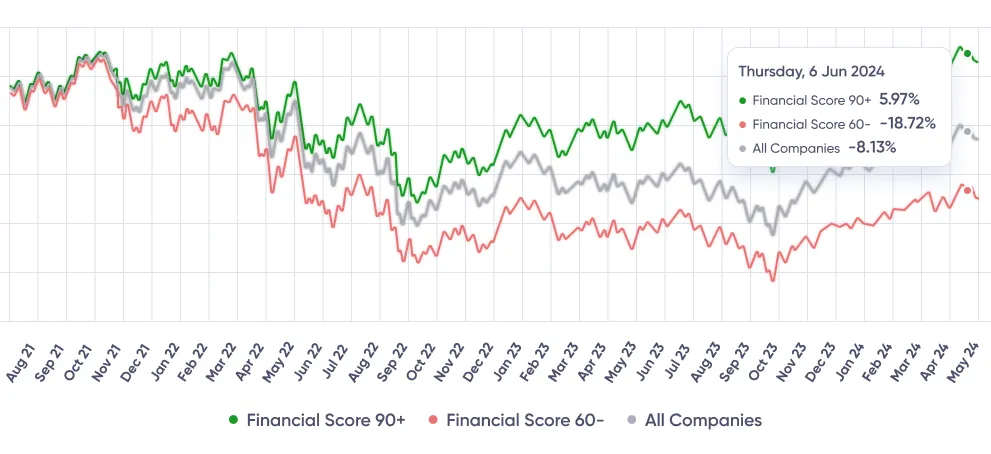
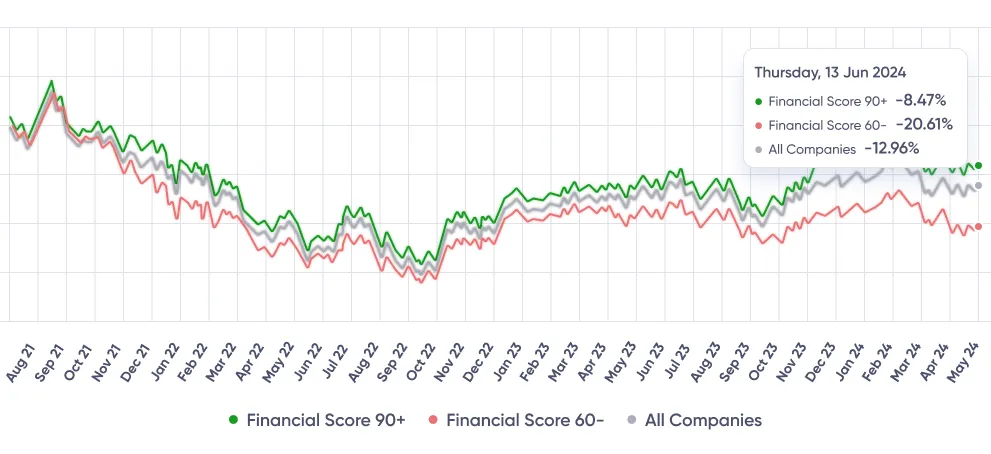
Historically, companies with a Financial Score of 90+ have significantly outperformed those with lower ratings. See how high-rated stocks (90+) compare to lower-rated stocks (60 and below) in terms of performance.
What’s MaxRatio (and Why It Matters)?
MaxRatio is a custom metric developed by the MaxDividends team to help spot companies with strong long-term dividend potential. It’s designed for investors who want to grow a solid stream of passive income over time—not just chase quick returns.
Basically, MaxRatio highlights companies that combine solid curr ent dividend payouts and strong dividend growth. It helps you focus on the businesses that are set up to deliver real results over the long haul.
How to Read MaxRatio
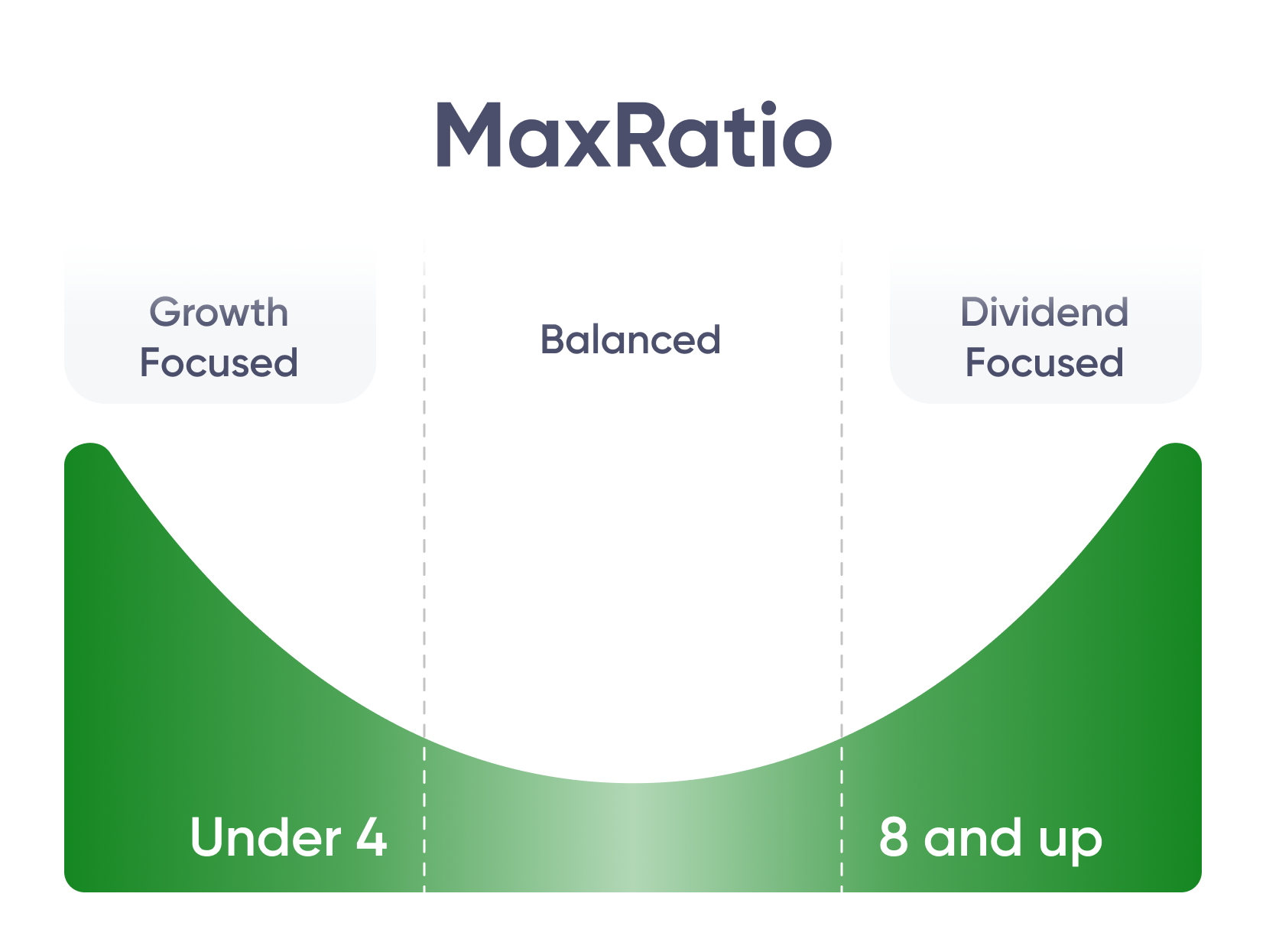
Lower MaxRatio (below 4) usually means the company is more focused on reinvesting in growth. These are typically fast-growing businesses that don’t pay much in dividends now, but could offer serious capital appreciation.
Higher MaxRatio (above 8) points to companies with a strong dividend focus. These stocks either: pay generous dividends today and increase them steadily over time or start with a smaller payout but have a history of raising dividends aggressively every year.
Mid-range MaxRatio (between 4 and 8) signals a balanced company—one that’s growing and rewarding shareholders at the same time. These are often sweet spots for long-term dividend investors.
The MaxRatio is calculated using current dividend yield, dividend growth over the past 3, 5, and 10 years, and the company’s latest Financial Score. It’s one of the best ways we’ve found to cut through the noise and find dividend stocks that are actually built to last.
⭐️ MaxDividends Five-Step Secret Formula
Here's the five-step formula we use to identify businesses built to last forever. Each step ensures that the company is financially strong, capable of generating growing passive income, and positioned for long-term success.
1️⃣ Sales Growth – The Foundation of a Strong Business
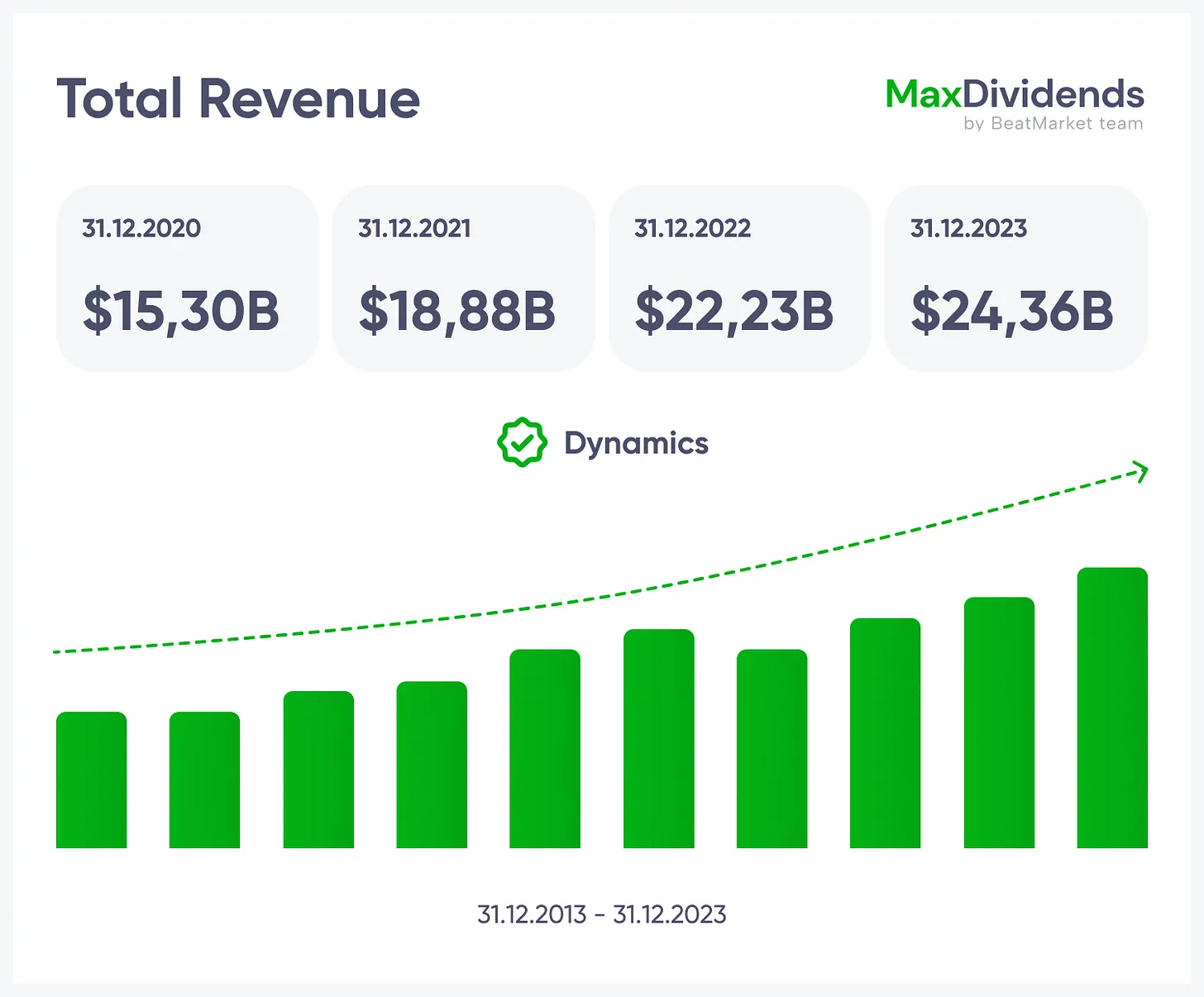
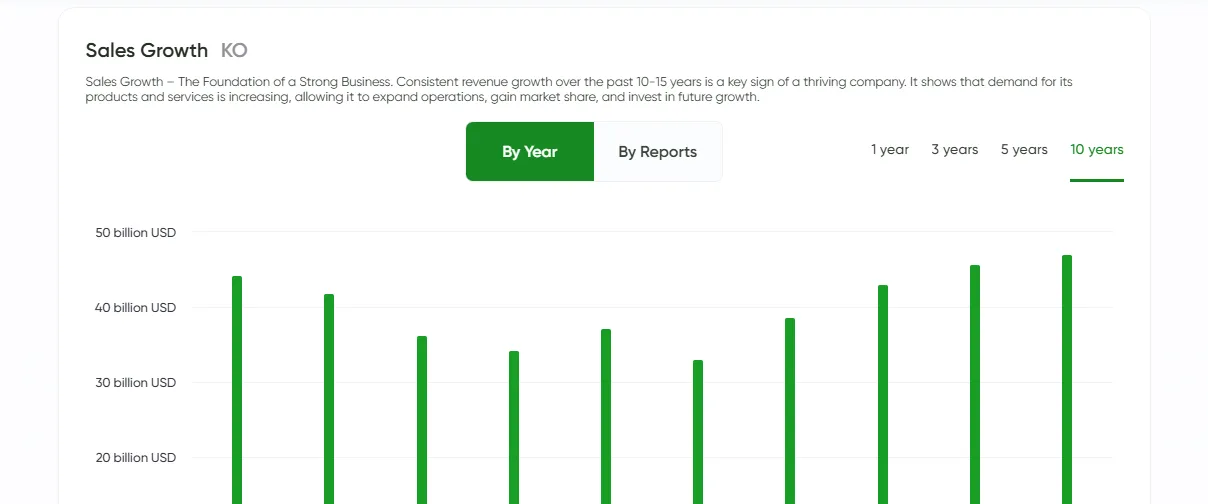
Consistent revenue growth over the past 10-15 years is a key sign of a thriving company. It shows that demand for its products and services is increasing, allowing it to expand operations, gain market share, and invest in future growth. Businesses that can consistently grow sales tend to have strong competitive advantages, making them resilient in any market condition.
A Key Indicator of Business Strength
We prioritize companies with long-term positive sales trends, as consistent revenue growth is a strong signal of a thriving business.
Sales trends are crucial—if sales are stagnant or declining, the business is in trouble. Sustainable growth starts with increasing sales, as it fuels profitability and long-term success. A company with strong sales momentum can overcome other challenges.
That's why the MaxDividends screener focuses on identifying businesses with a history of steady sales growth, ensuring they are on an upward trajectory and built for the future.
2️⃣ Profit Growth – The Fuel for Dividend Growth
Revenue alone isn't enough—what truly matters is how efficiently a company turns that revenue into consistent, growing profits. Profitability is the foundation of sustainable dividend growth and long-term financial strength.
Why Profit Growth Matters
Stronger Dividend Growth – Companies with rising profits have the ability to increase dividend payouts consistently without jeopardizing their financial health. When profits grow, dividends naturally follow.
Reinvestment & Expansion – A profitable company can reinvest in innovation, acquisitions, and market expansion, securing its future growth and competitive edge.
Resilience During Downturns – Companies with healthy and growing profits have better cash reserves and financial flexibility to weather economic downturns, inflation, and market volatility. This ensures stability in dividend payments even in tough times.
Efficiency & Strong Management – Consistently rising profits indicate a well-run business with disciplined cost management and the ability to maintain or expand profit margins over time.
At MaxDividends, we focus on companies with a proven track record of profit growth—not just those increasing revenue, but those consistently improving their bottom line.
These are the companies that not only reward shareholders today but also secure a future of rising passive income.
3️⃣ Net Business Income – The True Measure of Financial Strength
Net income is what remains after all expenses, taxes, and costs. This is the company's real earning power. We analyze businesses that generate strong, sustainable net income, ensuring they have enough cash flow to continue paying—and increasing—dividends over time.
Profitability Check: A Decade of Consistent Earnings
We prioritize companies that have maintained profitability for at least 10 years, proving their ability to generate steady earnings through various market cycles and economic conditions.
Why Profitability Matters
Sustained Dividend Payments – Only consistently profitable companies can reliably fund and increase dividends without taking on excessive debt.
Resilience Through Market Cycles – A 10+ year track record of profitability typically covers multiple economic cycles, including recessions, inflationary periods, and market corrections. Companies that remain profitable through these phases have proven their business model's durability.
Financial Strength & Stability – Long-term profitability ensures a company has strong cash flow, manageable debt levels, and the ability to reinvest in growth, innovation, and shareholder returns.
While some companies struggle during downturns, those with a decade of consistent earnings have already weathered major market events and economic disruptions.
These are the businesses we trust for long-term dividend growth and financial security.
4️⃣ Dividend Payout Safety – Protecting Your Passive Income
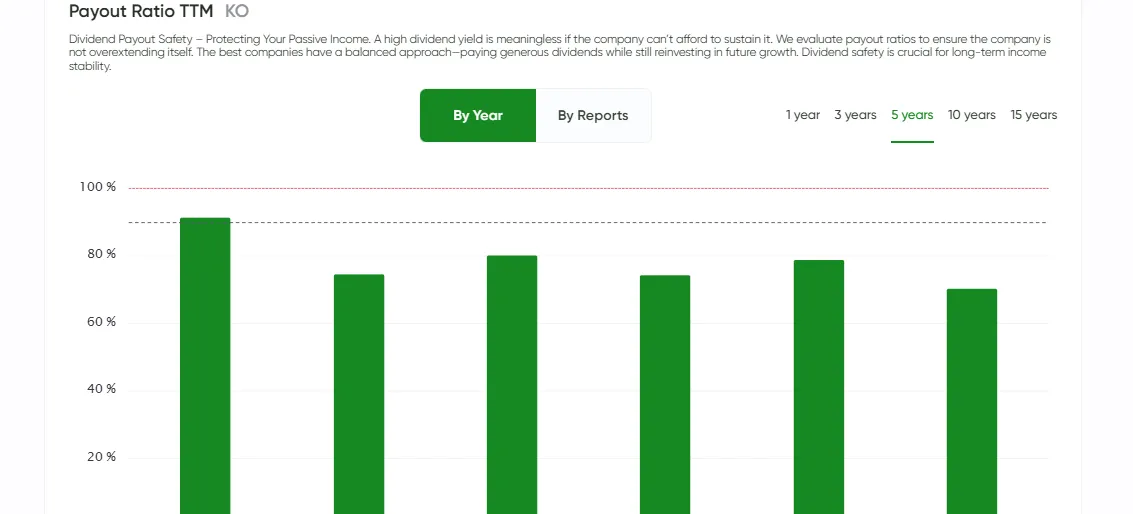
A high dividend yield is meaningless if the company can't afford to sustain it. We evaluate payout ratios to ensure the company is not overextending itself.
The best companies have a balanced approach—paying generous dividends while still reinvesting in future growth. Dividend safety is crucial for long-term income stability.
Dividend Consistency: 15+ Years of Reliable Payouts
We focus on companies that have paid dividends consistently for at least 15 years, proving their commitment to rewarding shareholders.
Why Dividend Consistency Matters
Reliable Passive Income – A strong dividend history ensures steady and predictable cash flow, essential for long-term investors seeking financial stability.
Proven Business Strength – Companies that maintain and grow dividends for over 15 years have weathered economic downturns, inflation, and market volatility—demonstrating resilience and financial discipline.
Confidence in Future Growth – A long track record of dividend payments and increases gives investors a strong foundation for predicting future income growth and building generational wealth.
At MaxDividends, we focus on businesses that don't just pay dividends—but consistently raise them year after year, ensuring a growing passive income stream you can count on.
Dividend Coverage – Ensuring Dividends Are Paid from Profit with a Sufficient Surplus
Stable dividend payments and long-term growth rely on dividends being funded by current profits rather than past earnings or borrowed money.
MaxDividends ensures that dividends are well-covered by profits, demonstrating strong financial planning and competent management.
5️⃣ Debt Burden – Avoiding Financial Traps
Too much debt can cripple a company, even if its revenues and profits look great. We analyze how well a company manages its liabilities, ensuring that debt levels are under control. Low-debt companies are better equipped to navigate economic downturns and continue paying dividends without disruption.
This is how we build lasting wealth and financial freedom.
💡 One More Secret Ingredient for the MaxDividends Strategy
Meet the Financial Score – your ultimate metric for selecting top stocks for your portfolio.
What Is the Financial Score?
The Financial Score is a rating system that evaluates a company's fundamental strength. It ranges from 20 to 99, with higher scores indicating stronger, more reliable companies.
Stocks with a score of 80+ are considered high-quality investments, while those rated 50 or below are seen as weaker choices. This score allows you to efficiently filter thousands of stocks and build investment strategies that maximize returns.
Global vs. Local Scores
The Financial Score consists of two components: Global and Local. The Global Score measures a company's strength on a worldwide scale, while the Local Score evaluates its performance within its home country.
Both scores use the same metrics but are ranked separately, helping you identify market leaders at both global and local levels.
Coverage and Methodology
Our team analyzes over 20,000 companies worldwide, covering:
We collect financial data daily and review 25 years of historical reports to ensure thorough and accurate evaluations. This long-term perspective allows us to assess a company’s resilience during economic downturns.
The Financial Score Consists of 3 Key Components
1. Growth Evaluation
We analyze key financial metrics, including sales, operating profit, net income, earnings per share, return on equity, and their trends over time.
Understanding whether a company is growing and evolving—or stagnating and incurring losses—is essential for making informed investment decisions.
2. Dividend Policy Evaluation
A company’s approach to dividends reflects its transparency and management strength. At MaxDividends, we assess:
Whether the company pays dividends
Dividend trends and payment frequency
Whether dividends come from current income rather than past profits or debt
Dividend per share and the percentage of profit allocated to payouts
A well-structured dividend policy—whether through consistent payments, regular increases, or reinvesting all funds into growth—indicates strong, strategic business management.
We also consider share buyback programs. When a company repurchases its own shares, it signals management’s confidence that the stock is undervalued.
3. Stability Evaluation
This section measures the company’s overall financial health, including:
The ratio of total assets to total liabilities
The ratio of current assets to current liabilities
Debt-to-equity ratio
Growth sustainability
A financially stable company maintains a strong cushion to navigate market downturns and continue operating effectively during economic crises.
Scoring System: Growth – Dividend – Stability
Each section — Growth, Dividend, and Stability—has a maximum score of 5 points. If a company meets all top-tier business criteria, it earns a total of 15 points.
The system then ranks companies and converts this evaluation into the Financial Score:
The Global Financial Score ranks companies worldwide.
The Local Financial Score ranks companies within a specific country.
Why This Matters
Buy Strong Businesses, Sell Weak Ones
Historically, companies with a Financial Score of 90+ have significantly outperformed those with lower ratings. See how high-rated stocks (90+) compare to lower-rated stocks (60 and below) in terms of performance.
Reading the Business, Not Just the Ticker
For us, every ticker on the exchange is more than a symbol. It's a business run by real people, working every day to bring value into the world. Some build simple, everyday essentials.
Others flip entire industries upside down with breakthroughs.
That's why we re-built the Company Analytics Page — so you don't just see numbers, you actually read the business.
Company Analytics Page
👉 At the very top, you'll now find a short, simple description: what the company does, how it makes money, and the value it adds. Because before you invest, you should know what you're partnering with.
See the whole business at a glance — what it does, how it earns, and the value it brings.
The Dividend Code — Right Up Front
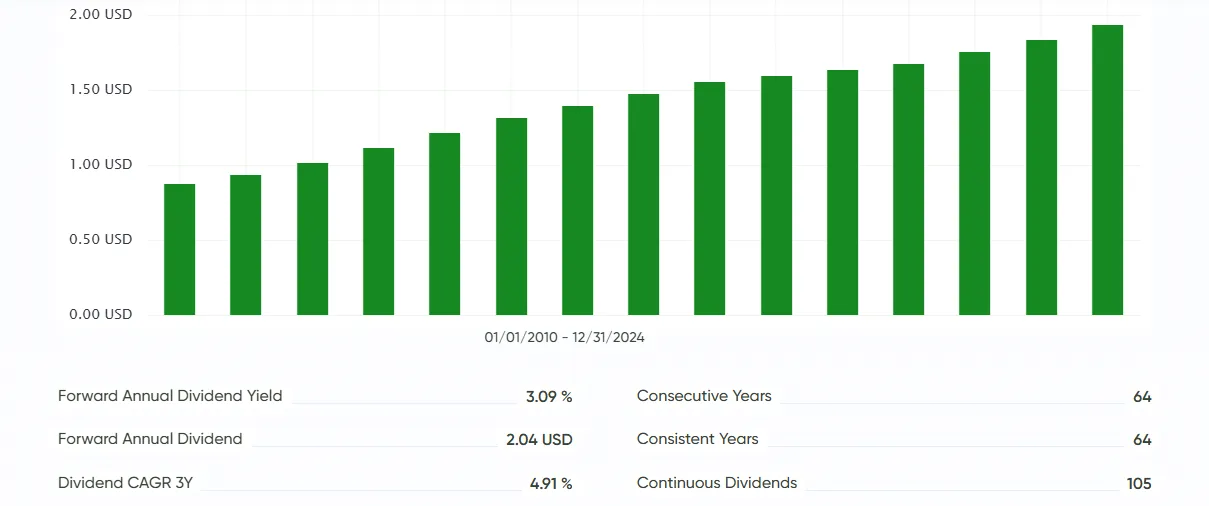
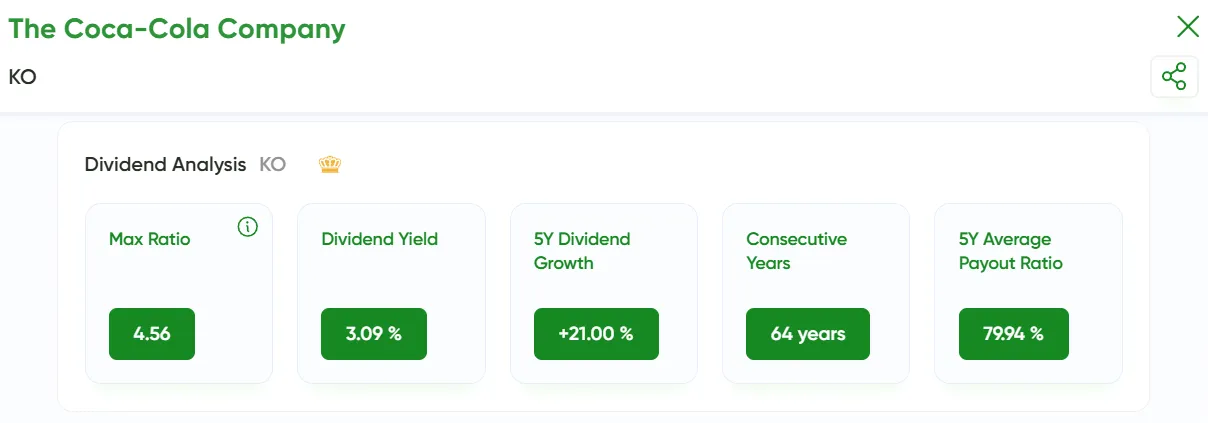
Right below that, you'll see the key dividend stats: yield, streak, payout ratio, growth history. In two clicks, you know whether this business fits your long-term plan and deserves a spot in your portfolio.
And let me tell you — behind that simplicity is serious work. Dozens of data providers, layers of filtering, a full moderation team, and the best financial database we could build. No compromises here. This is about your income. MaxDividends runs 24/7 to make sure what you see is accurate, clean, and trustworthy.
Key dividend stats in one place: streak, payout, yield, growth — clean, simple, accurate.
The Secret Formula, Made Simple
We've also rolled out the MaxDividends 5-Step Formula.
Our 5-step test for dividend safety and growth — sales, profits, debt, payouts, history — scored and ranked.
In one quick snapshot, you'll see the five pillars of dividend safety and growth:
Sales Growth
MaxDividends shows sales trends in seconds — so you instantly see if a business is still growing or stalling.
Growth trend, clear in one glance.
Profitability
Clean, simple view of margins — no digging through reports. You know right away if this company makes real money.
See if profits are real — instantly.
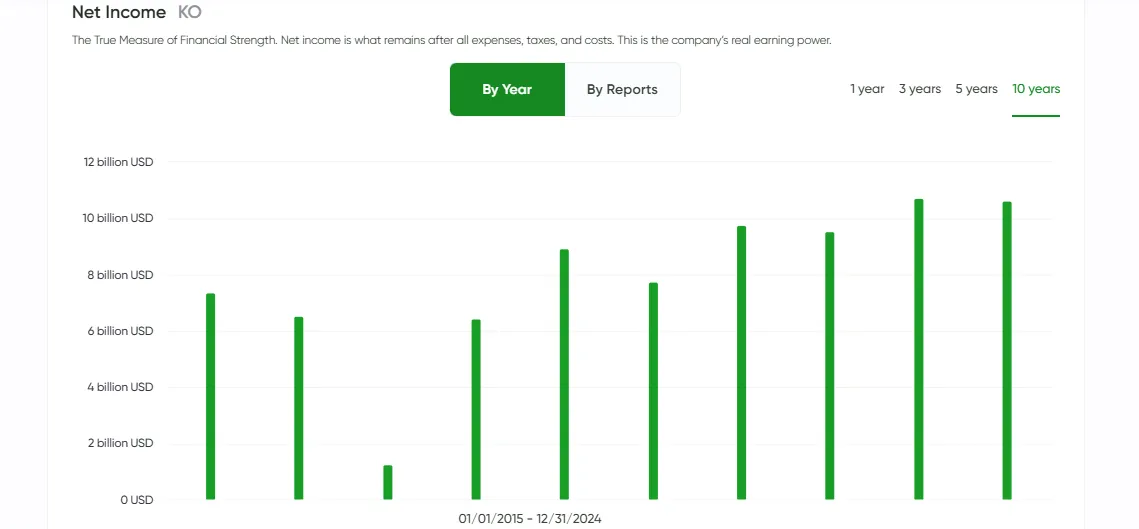
Net Income
Bottom line, crystal clear. MaxDividends tracks profit growth for you, saving hours of reading financials.
Bottom line made simple with MaxDividends.
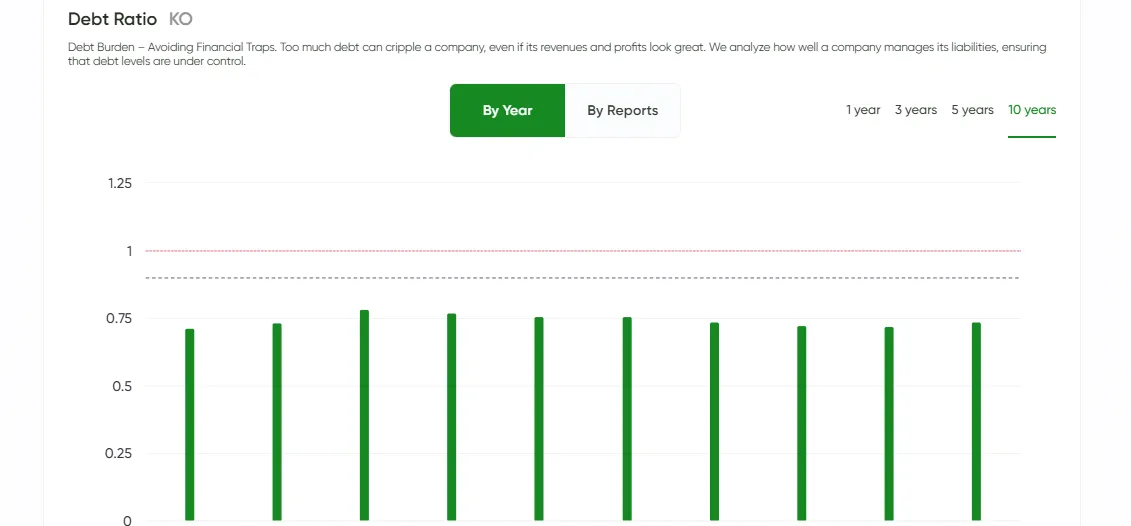
Debt Load
No need to crunch numbers — the app highlights debt levels and tells you if dividends are safe.
Debt risk checked for you, 24/7.
Dividend Payouts and History
With MaxDividends, dividend streaks and raises are front and center — decades of payout history at your fingertips.
Dividend streaks and raises at your fingertips.
All ranked and scored in a way that makes sense at a glance. Think of it as flipping through your favorite book and re-reading the best chapters — only here, it's the core story of the business you're considering.
This makes dividend investing clear, structured, and honestly — fun.
Valuation: Paying the Right Price
Once you've studied the business and its dividend code, the final step is price. And you know me — I love a discount. Why overpay when you can buy cash flow at a bargain?
We added clear valuation checks:
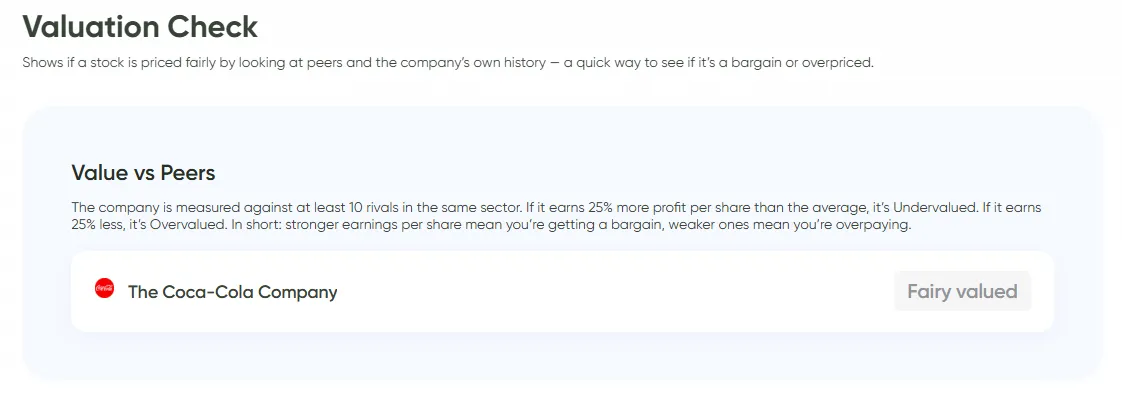
Is this stock fairly priced compared to peers?
Is it above or below its own 10-year average?
Is it even trading below book value?
Check if a stock is fairly priced vs peers, history, and book value — spot bargains before the crowd.
Stack the company against rivals. If it earns more per share, it's undervalued. If less, overpriced. Compare today's P/E with its own 10-year history. Above average = expensive. Below = bargain. See if the stock trades below its assets. That's buying the business with built-in margin of safety.
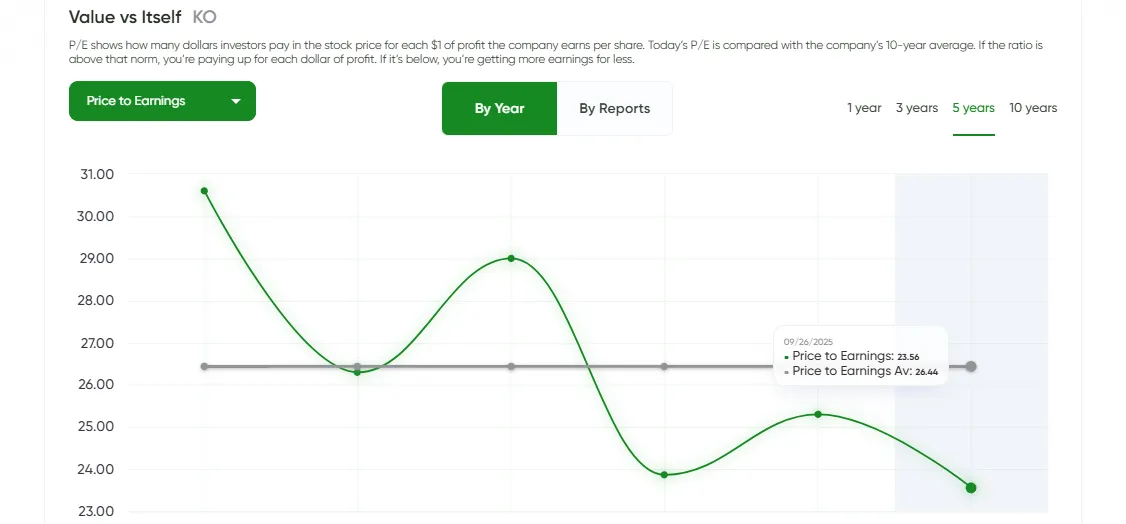

That's how you find hidden gems before the crowd — strong businesses trading at a discount, compounding your income and growth.
Continue with
Continue with
Have an account? Sign In
Forgot your password?
Notes
Комментарий
Это текст!
Confirm Deletion
All Set!
All Set
Training on the BeatStart course
To invest effectively as a reasonable long-term investor and create your first cool portfolio of stocks with the help of BeatGuru, take the BeatStart training.
At the BeatStart course, we will show how the market works and how the BeatMarket helps to be the best
You will also learn about the main features of the platform